○○Data Dictionaries
A shared understanding of what product data means
Digital data dictionaries help a service like Prodikt understand what information a manufacturer has and what information another part is asking for. Together with open standards, data dictionaries are becoming foundational for reliable data exchange between people, tools and machines.
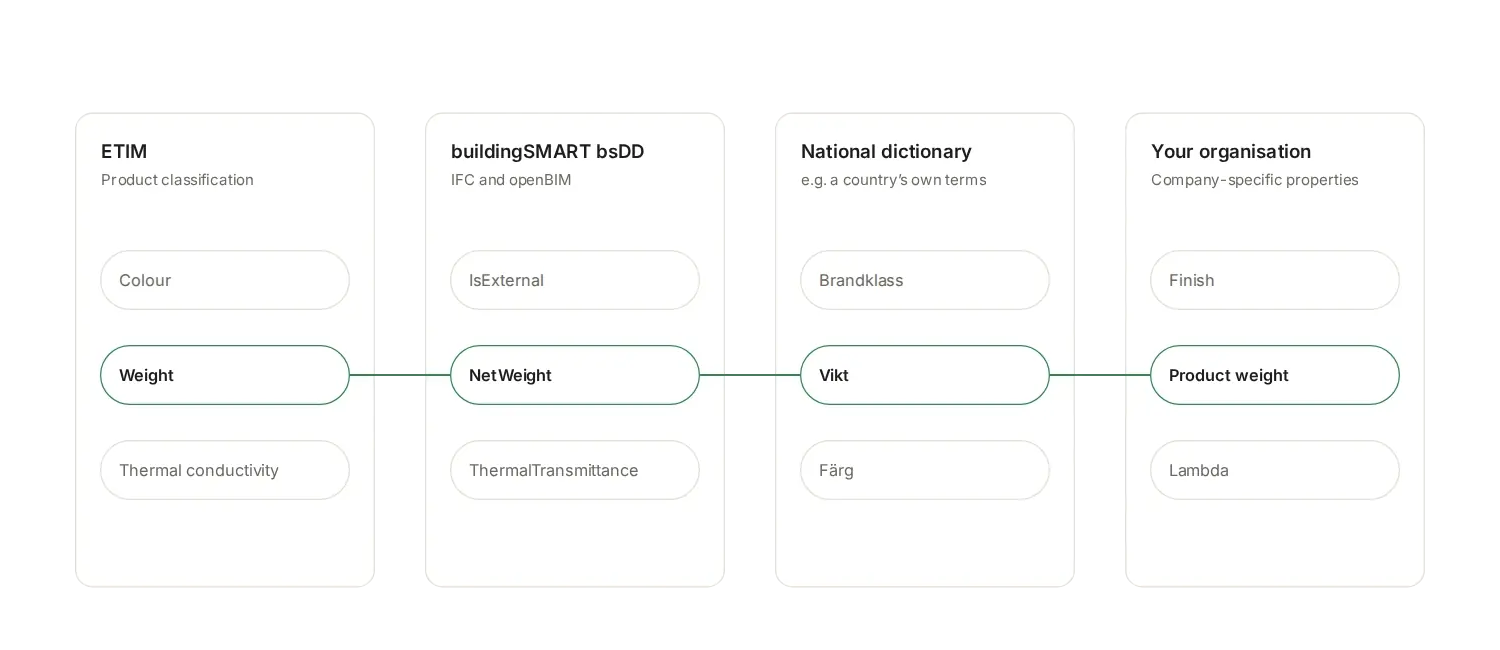
From building standard to data dictionary
Traditionally, building standards have been published as documents for people to read and follow. But when standardised definitions are made available in machine-readable dictionaries, software can reference them directly.Instead of simply documenting how information should be described, data dictionaries can help systems translate and understand information as it moves.
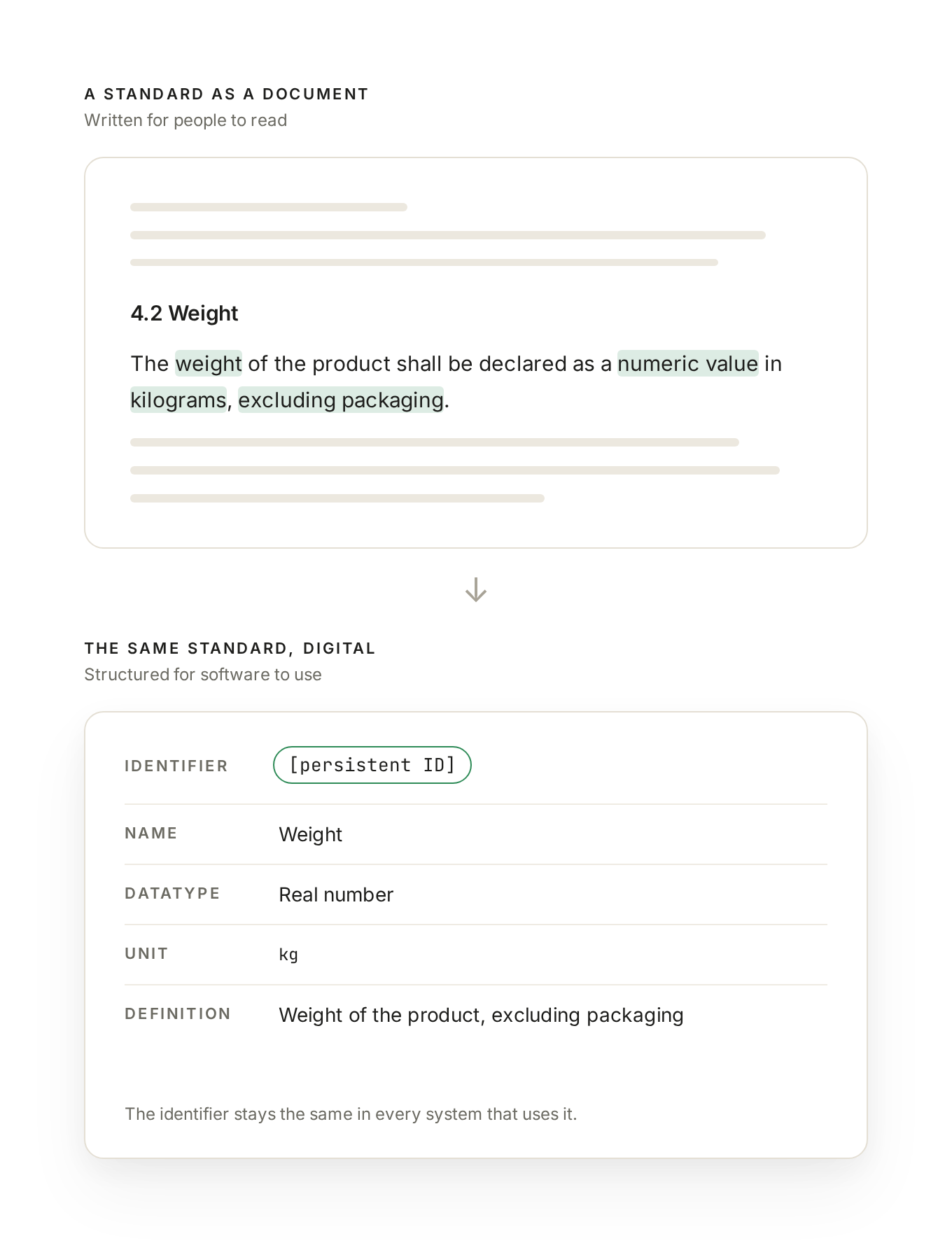
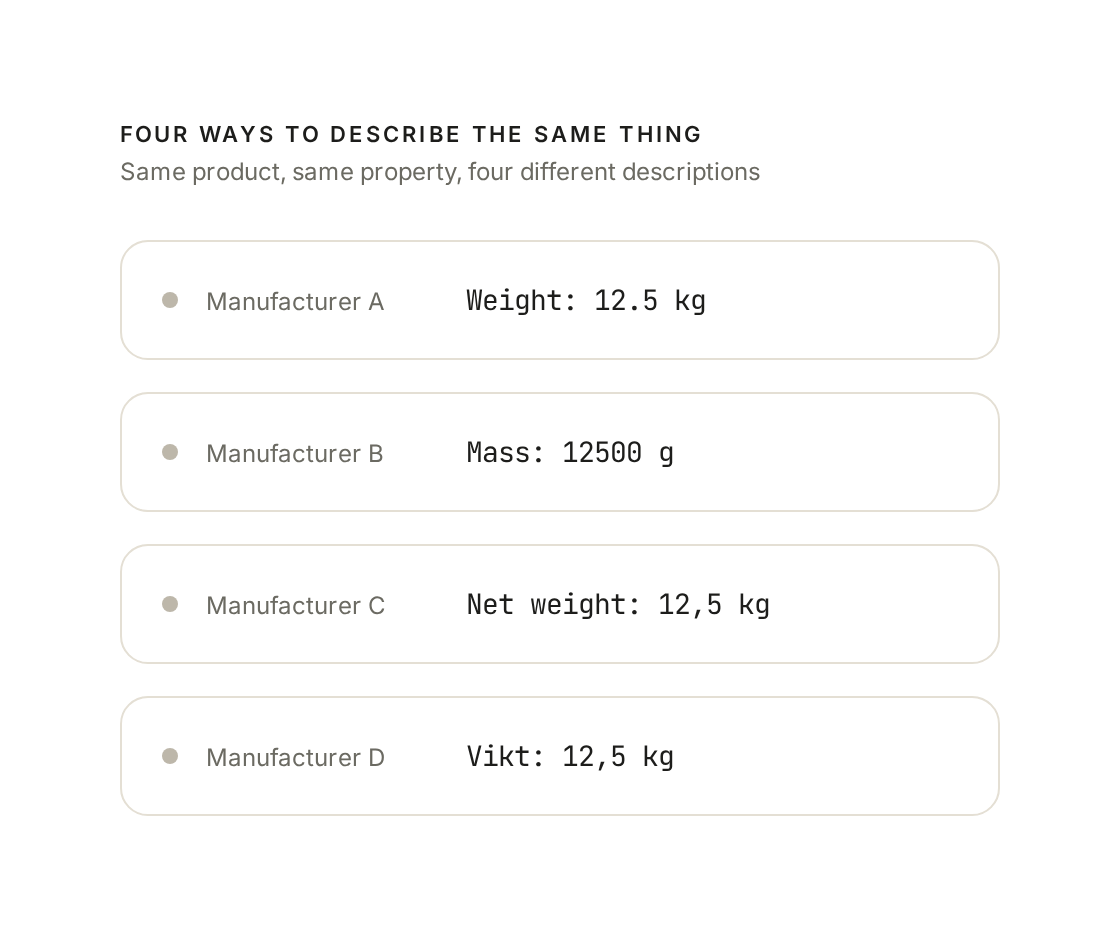
The problem isn't a lack of product data
Manufacturers already hold enormous amounts of information about their products. The problem is that everyone describes that information differently. This is where machine-readable dictionaries come in.Instead of a property existing only as “Weight”, it can be represented by a persistent identifier connected to a definition, datatype, unit and other information that describes exactly what the property means.
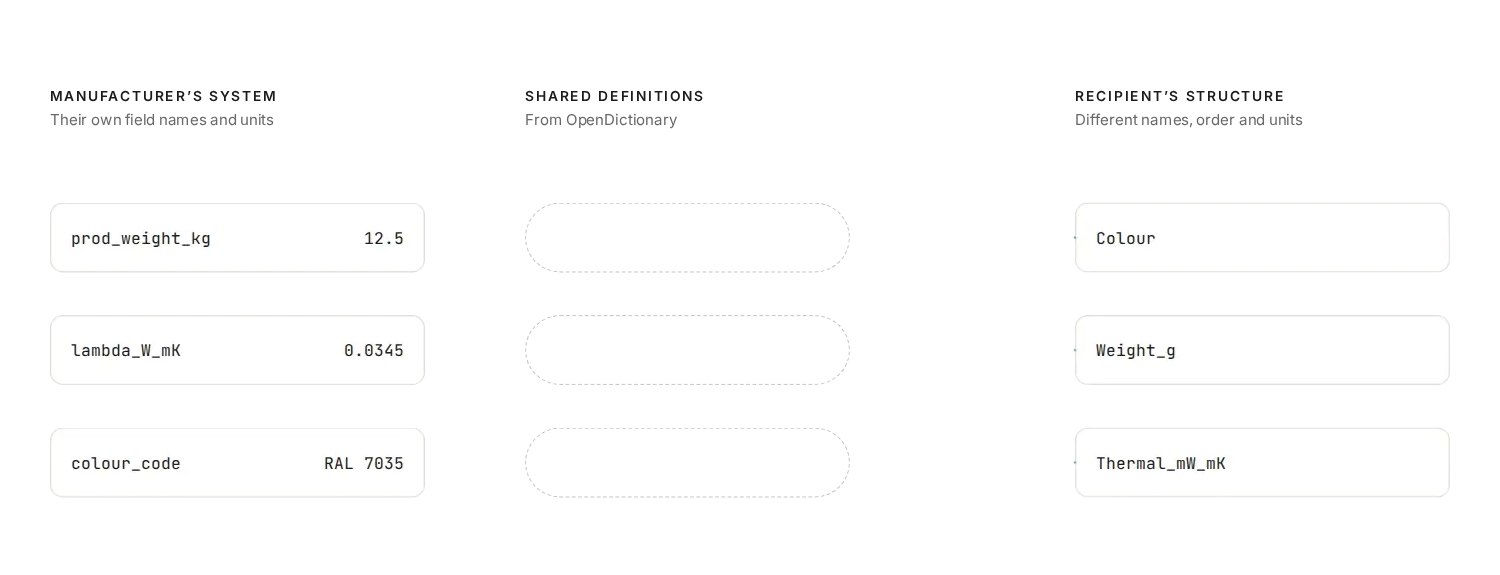
Establishing shared meaning across systems
When product properties are connected to shared definitions, software can recognise corresponding information across different data structures. This makes it possible to exchange product information more consistently, human-to-human and machine-to-machine.
OpenDictionary: Where data dictionaries are created, maintained and published
OpenDictionary is an open platform for creating, publishing and maintaining machine-readable data dictionaries for the built environment. It allows standards bodies, industry organisations and companies to define product properties with shared identifiers, definitions, datatypes and units.Prodikt is part of the initiative and references OpenDictionary to interpret product information and requirements.
Let’s set up your data requirements.
When you request product data through Prodikt, you need a way to specify exactly what information you want to receive.You can select an existing dictionary or define your own set of properties and requirements to describe the data your systems need. These definitions give Prodikt a reference for understanding what you're asking for and matching it with the information manufacturers provide.