
Home / Ressources / Specific EPD data vs generic data – traceability across your portfolio
9 January, 2026 [Blog]
Measuring, comparing, and reducing climate impact all depend on having access to accurate, well-structured product data. But for companies managing thousands of products from different suppliers, that quickly becomes a major challenge.
Valuable climate-related information is often locked inside static PDF documents, which usually have different formats, units, and lack version control. This creates significant challenges when it comes to updating and maintaining Environmental Product Declarations (EPDs). And because EPDs are rarely available at the item (SKU) level, linking them to specific products becomes complicated. The result? High-value data becomes challenging to interpret, manage, and integrate into business systems (such as ERP) and sustainability reporting.
The solution lies in understanding and structuring the two types of data that define a product’s climate impact (CO₂e): specific data (from EPDs) and generic data. This article gives you an introduction to how these two data types need to work together for you to achieve consistency, traceability, and a complete picture of climate impact across your product portfolio.
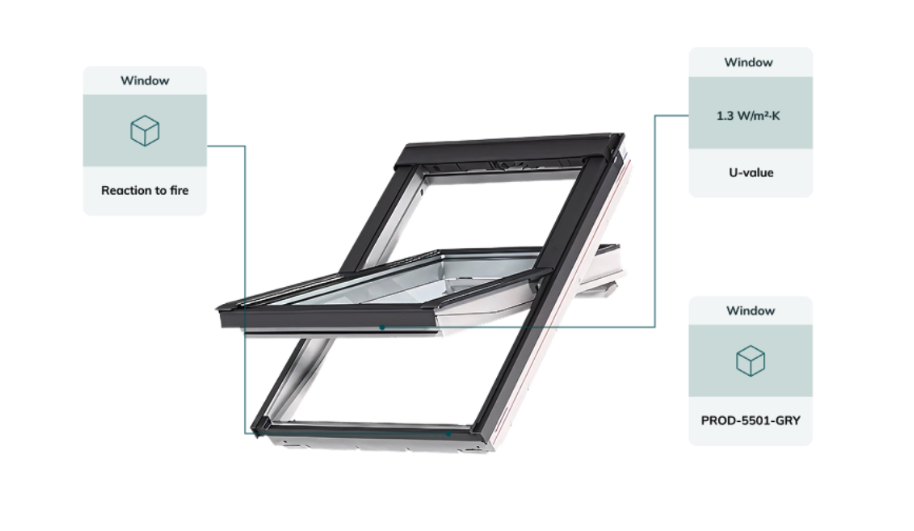
To manage sustainability requirements and report climate impact in your business systems, you first need to understand what climate data actually is.
Climate data describes the climate impact of a product, usually expressed as CO₂e (carbon dioxide equivalents). This is the standard unit that enables the comparison and calculation of emissions across an entire product portfolio.
To build a complete and traceable digital database, the kind you need when you’re managing thousands of products, you have to rely on two primary data sources:
Both types of data are essential for creating a comprehensive picture of climate impact across a product portfolio.
Although EPDs have become the accepted standard for declaring climate impact, in practice, they often act as a bottleneck when attempting to utilize the data in digital workflows. For software companies and distributors that need to integrate this information at scale, the challenges are clear:
The result? Valuable data becomes difficult to interpret, manage, and actually use in your business systems, project databases, and sustainability reporting.
Generic climate data plays a crucial role when specific EPDs are unavailable. It’s the key to helping anyone managing thousands of products build a complete picture of the climate impact across their product portfolio.
Generic data enables the assignment of climate values across your entire product portfolio. These values are based on standardized and verified methods, creating the consistency, traceability, and comparability that are critical for climate reporting, procurement, and product selection.
It’s essential to remember that the purpose of generic data is not to replace specific EPDs. Instead, it serves as a framework for transparency, ensuring that every product is assigned a representative climate value based on shared calculation principles. For generic data to be instrumental, it must be fully traceable and calculated in a manner that closely mirrors a Life Cycle Assessment (LCA).
Regardless of whether the data comes from a specific EPD or generic calculations, one thing is clear: digital structure is crucial for scalability. Continuing to rely on static PDF files, inconsistent units, and manual handling is neither a sustainable nor resilient approach for organizations managing large product volumes.
The key to success lies in managing both types of climate data in a way that ensures consistency, traceability, and seamless integration with your business systems.

.png)